What to check before choosing a narrow sideboard cabinet
A narrow sideboard cabinet can add storage to a room without making the floor plan feel tight. The useful ones do more than hide clutter. They give glasses, linens, cables, books or everyday bits a fixed home, while keeping the top clear enough for lamps, bowls or art. The trick is to look beyond the overall look and check how the piece will work in the room day to day.
Start with the space, not the furniture. Measure the wall or floor area where the cabinet will sit, including skirting, radiators, door swings and the path people use to cross the room. A compact 80cm wide piece may fit where a wider sideboard cannot, but depth matters too. Leave enough room to open doors and drawers without brushing past a chair or blocking a walkway.
Measure the room with the doors in mind
A cabinet can look slim in a photograph and still feel bulky once its doors open outward. Check the door type before deciding. Hinged doors need clear space in front, while drawers need pull-out room. Sliding doors can help in tight spots, though they may give access to only one side at a time. If the cabinet sits near a dining table, pull a chair out and see whether the cabinet door and chair can be open together. That small check prevents a piece that technically fits but feels awkward.
Think vertically as well. A narrow cabinet with useful height can take pressure off shelves and cupboards elsewhere. It can hold tableware, paperwork or media accessories without spreading them across the room. At the same time, a tall piece in a small room can feel heavy if it breaks up the wall too sharply. A lighter finish, simple handles or a gap beneath the body can help it sit more easily.
Check what the storage actually holds
Open every door and drawer in your mind before buying. Shelves are useful, but fixed shelves limit what fits. Adjustable shelves suit changing storage, such as tall bottles one season and stacked bowls the next. Drawers keep small items grouped, yet they need enough depth to be practical. A shallow drawer may look neat but become a place where things get lost.
Consider what needs to be hidden and what can stay visible. Dining rooms often need a mix: deep storage for spare chairs cushions and placemats, plus a surface for serving. Living rooms may need space for remotes, chargers and games. Hallways need a spot for keys and post, but not a surface that becomes a dumping ground. A narrow sideboard cabinet works best when each zone has a purpose.
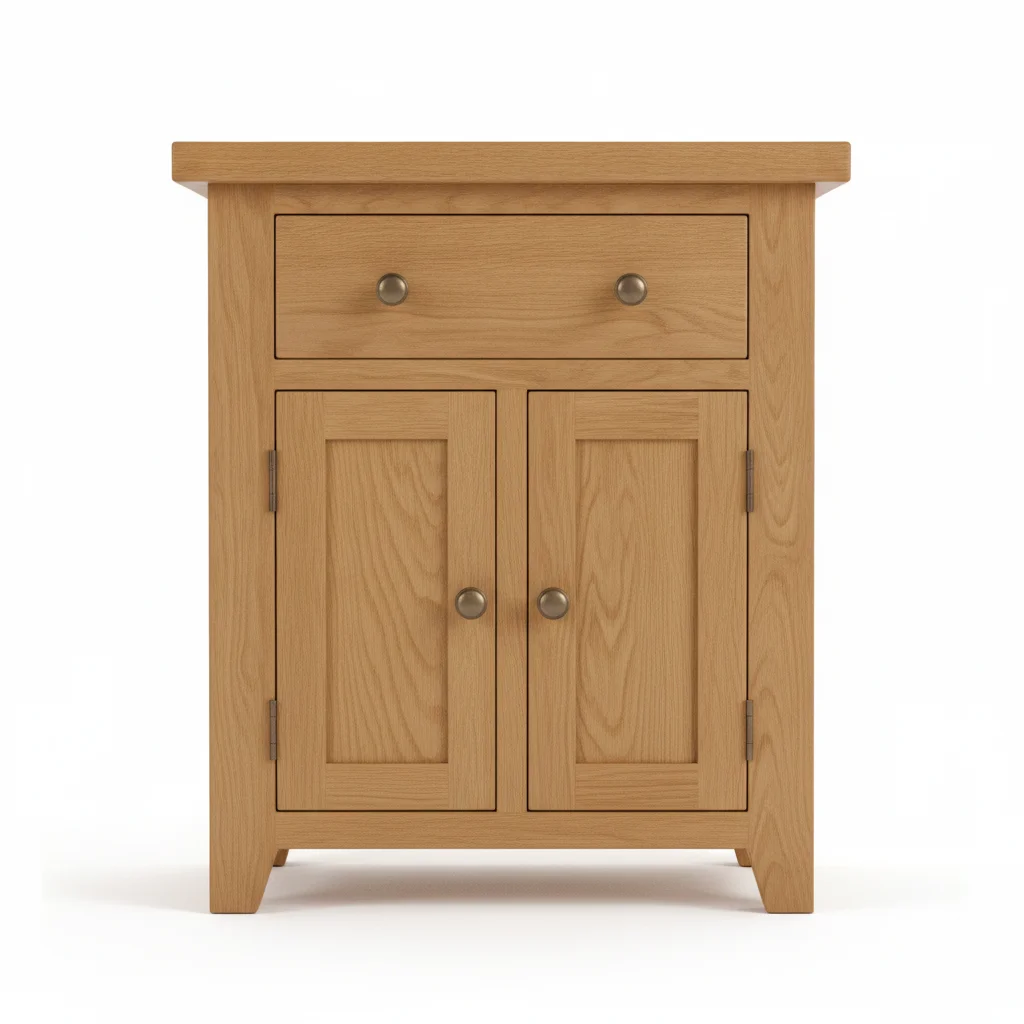
Pay attention to the inside, not only the outside. A cabinet with a solid back and tidy internal edges will look better when doors are opened often. Check whether the shelf positions suit the items you own now, and whether the lower storage is easy to reach. If the piece will be used daily, small details such as smooth drawer movement and comfortable handles matter more than a dramatic finish.
Match the finish to the room
Oak brings warmth and works well in rooms with neutral walls, painted wood or soft textiles. Painted finishes can make a compact piece feel quieter, especially in a busy room. The choice is less about what is fashionable and more about what the room already contains. Repeat a tone from flooring, trim, chairs or a nearby bookcase so the cabinet feels connected rather than added at random.
Oak Castle Furniture is a UK furniture site offering compact 80cm wide solid oak and painted sideboards and cabinets with storage, so it fits the kind of room where width is limited but storage is still needed. A piece in that size range can suit a dining room, hallway or living room when the layout is planned carefully. The finish should still be chosen for the room, not for the cabinet alone.
Light affects colour more than many people expect. A painted surface can look calm in a bright room and darker in a shaded corner. Oak can pick up warm tones from lamps and cool tones from north light. If possible, compare the finish with samples of flooring, wall paint or fabric already in the room. This helps avoid a piece that feels slightly wrong once it is placed at home.
Think about the surface as well as the storage
The top of a sideboard often becomes the busiest part. It may hold a lamp, a vase, a speaker, framed photos or the bowls used at mealtimes. Before choosing a cabinet, decide what will live on top and how much space those items need. A narrow top can still work well if it is kept simple. Too many objects can make the room feel crowded even when the storage inside is hidden.
Leave breathing room around each object. A lamp needs enough space for its shade, while a vase needs room so it does not feel perched near the edge. If the cabinet sits under artwork or a mirror, keep the arrangement low enough to preserve the wall above. A clear surface also makes the cabinet easier to clean and use.
Check the placement before the purchase
A sideboard can stand against a wall, but it can also define a zone in an open room. In a dining area, it may mark the edge of the eating space without adding a full-height barrier. In a living room, it can separate a seating area from a walkway while keeping sightlines open. This is where a narrow piece earns its place: it adds function without taking over the view.
Use masking tape on the floor to mark the footprint before committing. Add the space needed for doors or drawers. Walk around it mentally and check how it affects movement. This is a simple way to see whether the cabinet belongs against a wall, beside a table or across part of a room. It also makes it easier to judge whether the piece will feel balanced with nearby furniture.
Power points and sockets can shape the decision too. If the cabinet will hide cables or support a lamp, check where the outlets are and how cords will run. Avoid setups that rely on long leads stretched across a walkway. If a wall needs new electrical work, that is a job for a qualified professional rather than a quick furniture-day task.
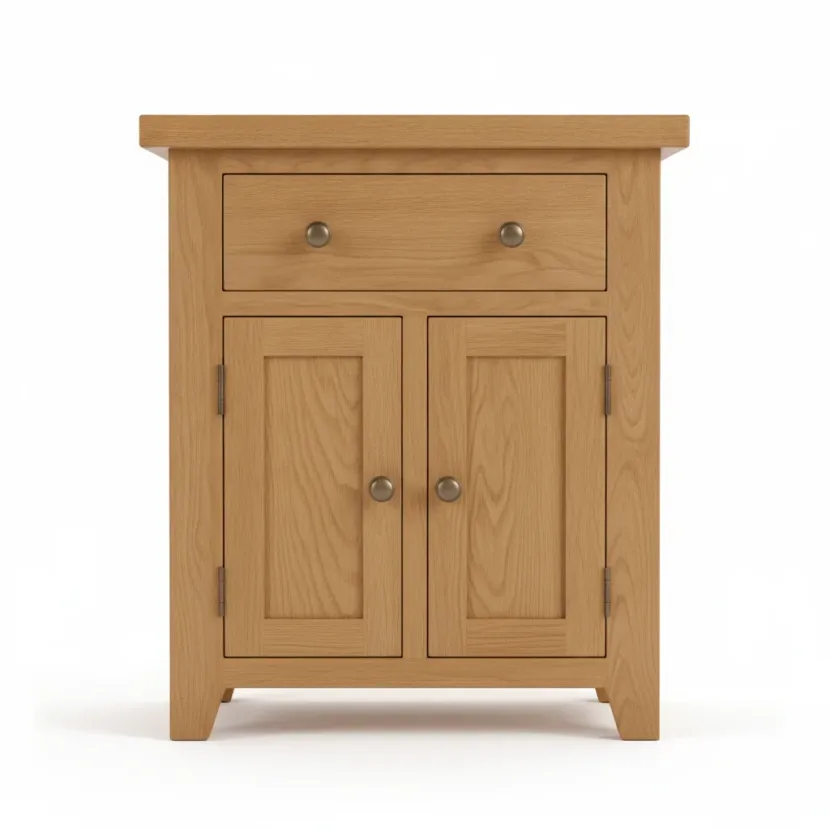
- Width and depth: Check the footprint and the space needed to open doors or drawers, not just the cabinet body.
- Internal layout: Look for shelves and drawers that match the items likely to be stored, with enough depth for daily use.
- Finish and colour: Choose oak or painted surfaces that connect with the flooring, walls and nearby furniture.
- Surface space: Make sure the top can hold the items it needs without turning cluttered.
- Room flow: Place the cabinet where it adds storage without narrowing the main route through the room.
Look for quiet details that help daily use
Small details change how a cabinet feels over time. Handles should be easy to grip and not catch on clothing. Doors should open far enough for the contents to be reached. Shelves should feel steady under normal household items. If the cabinet has feet or a plinth, check how it meets the floor and whether cleaning underneath will be awkward.
Another point is visibility. Open storage can make a room feel lighter, but it asks more of the owner because everything on display needs to look tidy. Closed storage hides clutter and suits busy rooms, though it can make a small space feel more solid. A mix can work well: doors for the messier items and one open area for a few chosen objects.
Oak Castle Furniture can be considered when the brief is compact storage in solid oak or painted finishes. The wider decision still rests on the room: its width, its walking routes, its light and the things that need a home. When those points are clear, a narrow sideboard cabinet becomes easier to choose, because the piece has a job to do rather than a gap to fill.
A well-chosen cabinet does not need to dominate the room. It should make daily tidying simpler, keep frequently used items close and leave enough open space for the room to breathe. Measure carefully, check the storage inside and picture the cabinet in use. Those habits lead to a calmer result than choosing by appearance alone.
Ends · THETIDYINTERIOR